Underground Water Storage Tanks vs Above-Ground Tanks: Which Fits Your Site?
The decision to either place the water storage tank underground or above the ground is largely dependent on the type of foundation, depth of burial, and soil preparation. This guide will help you choose the right setup based on a real-world application.
Uses for Water Storage Tanks
Water storage tanks are mainly installed to support supply management, reliability, and conservation. They are usually installed to bridge the gap between the supply and demand of water in daily life activities.
Potable Water Source
Generally, a water tank can be auxiliary or a stand-in for the main water supply if the groundwater is scarce or unreliable. Places that have limited water supply usually use water storage tanks to maintain a regular potable supply and a backup supply in case of outages.
Rainwater Harvesting
Rainwater harvesting means collecting rainwater from roofs and other paved areas. This water is then released as needed. It is often used in irrigation to minimize reliance on external water sources. This process also reduces soil erosion from runoff.
Fire Suppression and Sprinkler Reservoirs
Commercial and rural properties reserve water exclusively for fire-protection purposes. The firefighting water storage tanks carry a guaranteed volume of water readily available to a sprinkler system or for an emergency response.
Greywater
Greywater is referred to as lightly-used water, such as HVAC condensate or rainwater running off roofs. It's not meant for human consumption but could be used to irrigate forms of vegetation and to perform other types of activities that require non-potable water.
Agri-Business
The agricultural industry is heavily dependent on the ability to store water for animals and vegetation. Tanks for water storage guarantee a regular supply throughout the year and under different conditions, including times of extreme drought.
What is an Underground Storage Tank
An underground storage tank is a tank that has been placed below ground level, with a minimum of 10% of its total volume buried. These in-ground systems are used in spaces where space is limited or concealment is a matter of concern.
Underground Water Storage Tanks Pros and Cons
One of the key benefits of having your water storage tank underground is that it is not exposed to the elements. Because of this, they can remain at a consistent temperature throughout the year. But they need more installation planning and may be harder to access later.
Advantages of Underground Storage Tanks
- Low profile
- Maintain a steady temperature
- Capacity potential
Low Profile
Since the tanks are placed underground, the land above will still be available for landscaping, parking vehicles, etc. With only access points and pipes exposed, the site can look good with less effort from the property owner.
Maintain a Steady Temperature
The soil acts as a natural insulator, so the temperature of underground water storage tanks will not fluctuate very much throughout the year. It is less likely to lead to freezing in the winters or become extremely hot in the summers.
Capacity Potential
Storing your tank underground also allows you to store far more water while taking up less space at ground level. This can be useful where above-ground height or space is restricted.
Disadvantages of Underground Water Tanks
- Higher installation cost
- Complex site preparation
- Limited accessibility
Higher Cost
The installation will include excavation, support for the structure, back-filling, and restoring the installation site. If you add in other elements like pumps or piping, etc., those will also require additional labor and materials and, in turn, raise the overall cost.
Difficult to Maintain
Once installed, access is limited. Detecting cracks and leaks can become quite challenging. Moreover, the repairs might need excavation. If the soil has a lot of clay, it can also influence the effectiveness of the tank.
What Is an Above-Ground Water Storage Tank
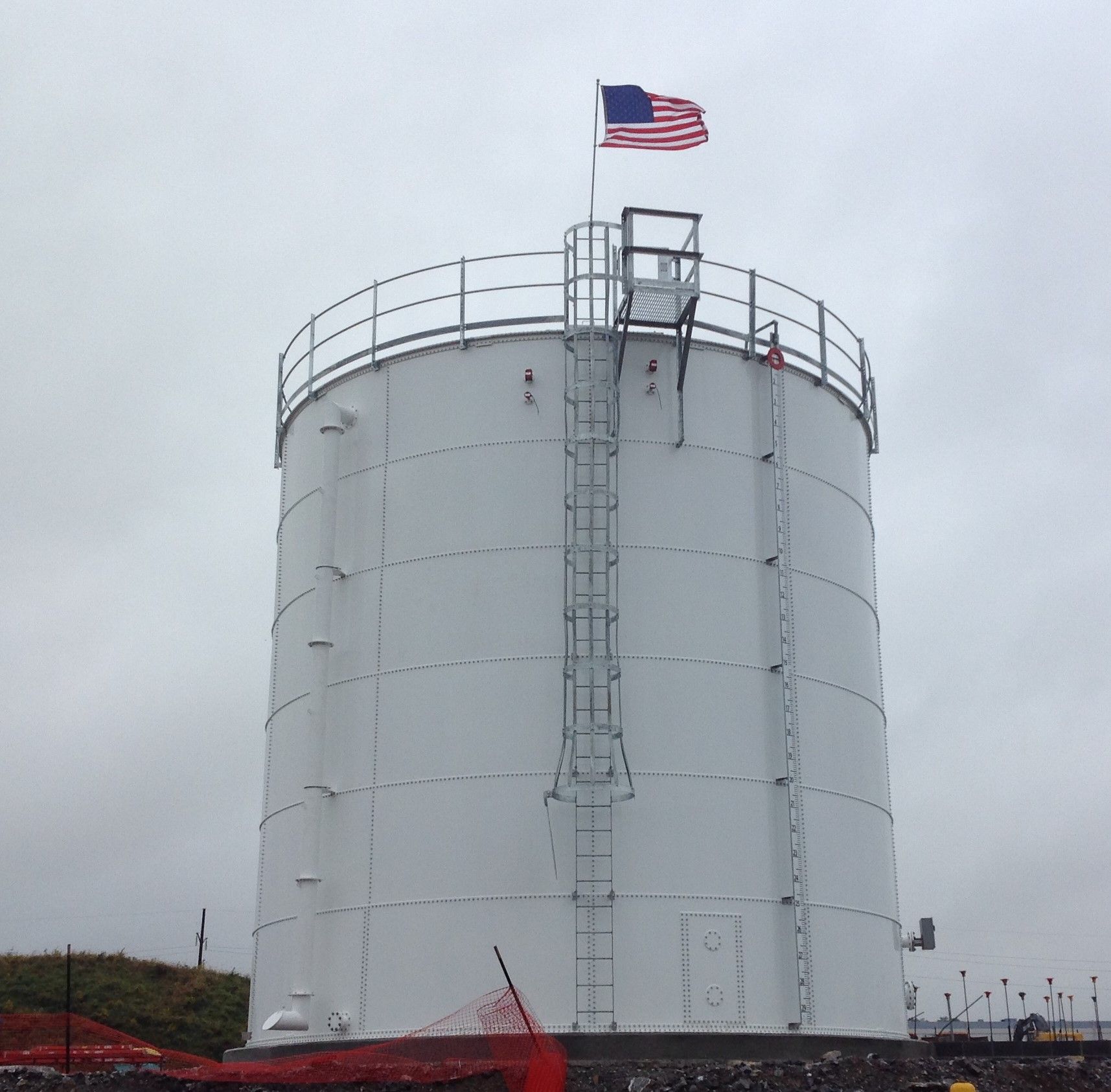
A water storage tank that is completely above-grade level & 100% visible to the eye, is called an above-ground water storage tank, and this type of tank can be used for water harvesting, mostly because they provide easy access to the stored liquid & make installation of rainwater harvesting systems easy.
Above-Ground Storage Tanks Pros and Cons
Above-ground storage tanks are generally preferred for easier installation and maintenance, although these are also exposed to different conditions.
Advantages of Above-Ground Water Tanks
- Easier access for inspection and repair
- Lower installation complexity
- Flexible placement options
Easier to Maintain
Since the aboveground tanks are fully visible, inspection is not a problem. Any signs of leaks, cracks, and faulty connections may be detected and addressed promptly and efficiently.
Aesthetics
Above-ground tanks may also be integrated using enclosures and different finishes for better aesthetics. Some properties also like to show off these tanks to demonstrate their efforts toward conservation.
Disadvantages of Above-Ground Water Storage Tanks
- Exposure to temperature changes
- Greater weather impact
- Potential placement limitations
Difficult to Maintain Temperature
Water storage tanks above-ground get direct exposure to the elements. The contents of these tanks may become warm in the summer months, while in winter, there might be a need for some kind of protection against freezing, depending on the location.
Weather Damage and Physical Exposure
As a result of being in contact with the wind, sun, and external forces, above-ground tanks are at greater risk of developing leaks, which might only become noticeable after a period of time.
Leak Risk
Even though leaks are more visible in above-ground tanks, you need to take proper care of fittings.
Government and Other Regulations
Above-ground tanks may have to conform to zoning laws, which vary according to geographical location.
Capacity and Placement Limits
The size of an above-ground water tank may be restricted by available space, height restrictions, and other site constraints. Access clearance for installation and maintenance must also be considered.
Foundation First: What Placement Means for the Build
The decision on underground vs. above-ground tanks is taken on the basis of the foundation.
- Foundation type: An above-ground water tank requires a solid foundation that must be stable and built from concrete. On the contrary, the foundation of underground water tanks will require excavation work.
- Burial depth: Underground tanks have to be buried to a depth that is relevant to the soil conditions and the loads required.
- Soil preparation: The soil conditions, drainage, and water level have a direct influence on the underground construction process and stability of the tank.
These conditions are far more important than the tank itself in construction costs and feasibility.
Installation, Maintenance, and Cost Comparison
The major difference in the installation, maintenance, and costs relates to the comfort of access to the tank over a period of time.
Installation
Above-ground tanks are faster to install in comparison to underground ones that call for more in-depth preparation. You’ll need these things to install the tanks, respectively:
- Above-ground: base prep, leveling, placement, and connection access
- Underground: excavation, backfilling, and underground piping
Soil conditions and groundwater can significantly affect the complexity.
Maintenance
Access is the main difference between the two options.
- Above-ground tanks: You can see the above-ground tank easily, so it can be repaired faster by having full access to it. It is much easier to clean because you can simply drain the tank, remove the sediment, and dispose of it in an environmentally safe manner.
- Underground tanks: Underground tanks are more challenging to access. It is often more difficult to conduct inspections and maintenance. Their cleaning frequency is also less than above ground tanks and requires professional-use equipment for the evaluation itself.
Cost
Cost differences are largely driven by installation requirements.
- Above-ground tanks: Typically involve delivery, base preparation, and basic connections, making them relatively simpler and more cost-effective to install.
- Underground tanks: Require excavation, skilled labor, plumbing, backfilling, and site restoration, which significantly increases complexity and cost.
Underground systems are typically not DIY-friendly and require specialized work
Choosing a Water Storage Tank
Selecting between underground and above-ground tanks comes down to how your site is built. Underground tanks are relevant in situations where space is limited and temperature control is a requirement, but they require more planning and effort. Above-ground tanks are far easier to install and maintain. In most cases, soil conditions, access, and overall foundation work will determine the final choice. Before making that decision, it helps to review the key site and planning factors below.
- Available surface space
- Desired tank visibility
- Soil conditions and excavation feasibility
- Burial depth constraints
- Climate and freezing concerns
- Installation requirements
- Maintenance access preference
- Budget and timeline
- Local permitting expectations
- Whether you may need a larger capacity now or later
| Factor | Underground Tanks | Above-Ground Tanks |
|---|---|---|
| Surface Space | Minimal impact | Requires visible space |
| Visibility | Hidden | Visible |
| Soil Conditions | Critical factor | Less sensitive |
| Burial Depth | Required | Not applicable |
| Climate Considerations | More stable temperature | Exposed to the weather |
| Maintenance Access | Limited | Easy access |
| Budget and Timeline | Higher cost, longer install | Lower cost, faster install |
| Permitting | Often more complex | Site-dependent |
| Capacity Flexibility | Can support large volumes | Limited by footprint |
Frequently Asked Questions
Recent Posts
Industrial Tank Restoration: When to Repair Instead of Rebuild
How to Choose a Water Storage Tank Size That Scales with Your Business: Why Bolted Design Wins
Tank Foundation Types: Ringwall vs. Slab vs. Deep Foundations
Custom vs. Ready-Made Steel Tanks: What’s Best for You?