Data Center Water Usage: How Cooling Systems Depend on Storage
Data center operations depend on reliable water systems for efficient cooling, fire protection preparedness, and continued operation.
Water storage solutions on-site help to prevent or reduce risk, facilitate supply opportunities, and improve resilience. Let’s look at how these work in fast-moving projects.
Why Water is Central to Data Center Cooling
All server racks generate heat, which must be rejected continuously, or equipment fails within minutes. Water-based cooling systems are more effective heat transfer media than air, and cooling water in the tank helps ensure the continuous availability of that cooling medium. The basic idea is simple: chilled water loops absorb heat from IT systems, and cooling towers absorb heat from the air by way of evaporation.
Water use varies widely by facility size, cooling architecture, climate, and operating profile. Medium and large data centers can require significant daily volumes of make-up water during peak conditions, especially in water-cooled designs.
Cooling Approaches You'll See on Real Projects
- Air-based cooling:
- The baseline for many facilities.
- Uses precision air conditioning to maintain temperatures.
- It works well at lower densities but struggles as heat loads increase.
- Water and liquid cooling:
- Comes in several forms.
- Traditional chilled water systems circulate water using cooling coils that clean air before it reaches servers.
- Direct-to-chip cooling typically uses water or water-glycol loops, while immersion cooling relies on dielectric fluids and may reduce direct water demand on-site.
- Immersion cooling submerges entire servers in dielectric fluid.
- Hybrid systems:
- Combine methods based on climate and load.
- A facility might use air cooling for general zones and liquid cooling for high-density racks, with thermal energy storage smoothing peak demands.
Make-Up Water: The Hidden Dependency That Can Stop Cooling Fast
Cooling towers lose water from evaporation and blowdown. Both processes mean you must replace water constantly. This replacement water is called make-up water, and without a reliable supply, your cooling water in the tank capacity drops quickly.
There are many things that interrupt make-up water delivery:
- Municipal water main breaks
- Contamination events
- Extreme heat waves
- Scheduled maintenance.
So, when the supply stops, the cooling towers cannot reject heat, leading to increased temperatures across the facility. On-site data center storage tanks provide the buffer that keeps data center cooling water systems operational when the external supply fails or falters.
Beyond Cooling: Where Else Do Data Centers Use Stored Water
1. Fire Protection Reserves
What’s it for:
- Fire suppression systems in data centers typically avoid water in server halls, using gas-based systems instead.
- But the broader facility needs traditional sprinkler protection in power distribution areas, mechanical spaces, offices, and loading docks.
Why storage helps:
- Fire protection service
- Support pump connections
- Level monitoring
- Frost protection
2. Process Water and Facility Needs
What’s it for:
- Humidity control systems to prevent static discharge
- Water treatment equipment that conditions make-up water before it enters the cooling loops
- General maintenance operations.
Why storage helps:
- Supports predictable scheduling so operators can maintain and clean systems without worrying about temporary supply interruptions.
3. Thermal Energy Storage and Chilled Water Buffering
What’s it for:
- During off-peak periods, chilled water can be produced and stored in insulated tanks.
- During peak demand, this stored thermal energy reduces chiller load rather than fully replacing active cooling.
Why storage helps:
- Provides critical backup cooling during chiller maintenance or failure, keeping servers safe while redundant systems come online.
- A water cooling tank helps in maintaining thermal performance throughout long storage periods.
Reliability Planning: Redundancy, Uptime Targets, and Why Storage Is Part of It
Data centers design critical systems with built-in backup capacity so operations continue during maintenance or component failure. Two common approaches dominate the industry, and the goal is to eliminate single points of failure:
- Having an extra backup unit and sufficient cooling water in the tank to maintain operation during failures or maintenance events.
- Have a completely duplicated system for immediate use.
Water storage fits directly into this reliability framework. So, having enough stored water with extra backup and a completely duplicated system in your facility helps keep cooling and safety systems running during interruptions.
Water Efficiency and Sustainability Pressures Are Rising
Water is often tied to cooling and has increasingly been tied to having facility approval with a social license to operate. But improving energy efficiency can help us reduce data center water consumption by reducing the cooling demand. This can be done by measuring and monitoring water usage. This also gives operators data to optimize systems and showcase responsible resource management.
Water Storage Options for Data Centers and When Each Makes Sense
Different storage technologies serve different project needs:
| Storage | Capacity Range | Deployment Speed | Footprint | Best-fit Use Cases |
|---|---|---|---|---|
| Bolted Steel Tanks | Large volume storage | Moderate to long lead time | Large, requires a foundation | Fire protection, cooling reserves, TES, and permanent high-volume storage. |
| Modular Panel Tanks | Small to mid-volume storage | Shorter lead time | Smaller footprint, can fit tight spaces | Retrofit projects, space-constrained sites, phased expansion. |
| Temporary/Emergency | Short-term storage | Rapid deployment | Flexible placement | Construction/commissioning bridge, emergency response, temporary surge capacity. |
1. Bolted/Steel Tanks for Large-Volume, Long-Life Storage
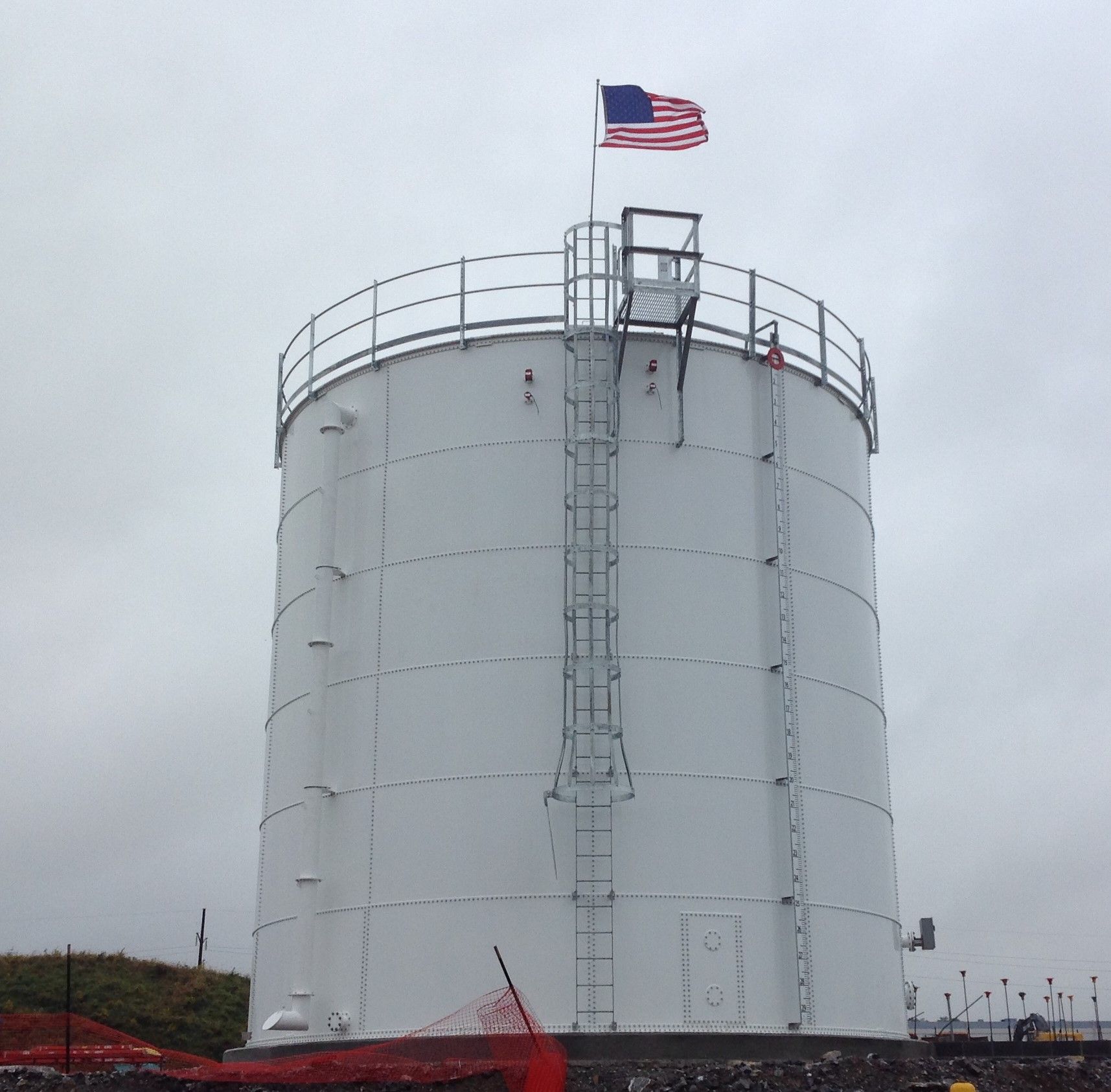
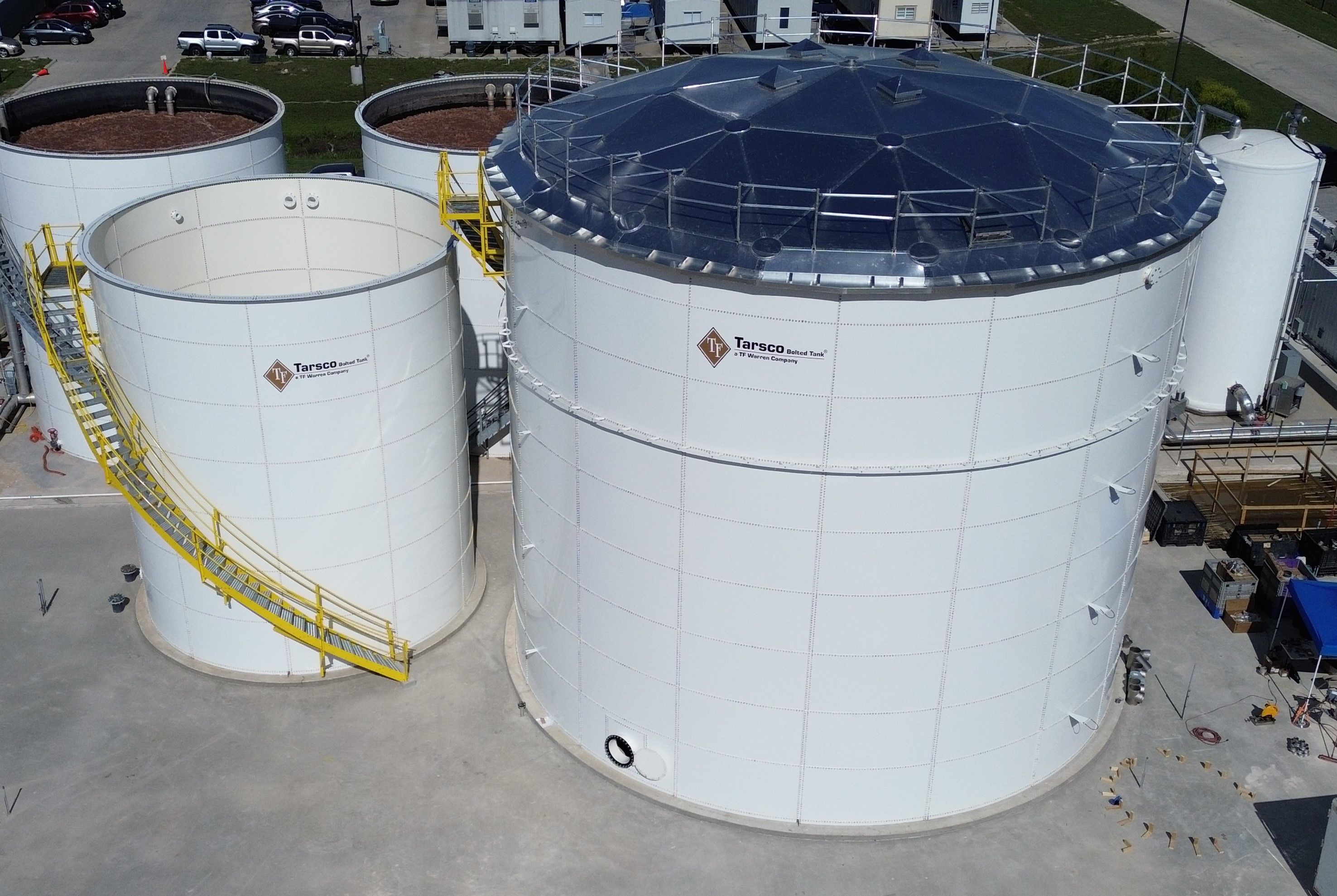
Factory-coated bolted steel tanks provide the backbone for data center water use storage serving fire protection, cooling system reserves, and thermal energy storage.
2. Modular Tanks for Tight Footprints or Fast Installation
Data center expansions and retrofits often face space constraints that make traditional large tanks impractical. Bolted panel approach works at smaller scales too, with modular configurations that fit tight urban sites, rooftop installations, or indoor mechanical spaces.
3. Temporary/Emergency Storage During Construction or Upgrades
Construction and commissioning phases often require water storage before permanent systems are operational. Temporary tank systems provide bridge capacity during construction, support phased commissioning sequences, and offer emergency backup when permanent storage needs augmentation.
How to Specify the Right System: A Practical Checklist
When you're evaluating a cooling water tank system for a data center project, work through these considerations systematically:
- Calculate capacity plus growth margin based on current demand for all uses, then add capacity for future expansion and reasonable reserve margins.
- Determine your redundancy approach and whether storage must support N+1 or 2N reliability standards.
- Measure available space, foundation capacity, access for delivery and installation, and clearances for future maintenance.
- Identify water quality and treatment requirements for make-up water, compatibility with cooling system metallurgy, and any special considerations for fire protection service.
- Verify which codes and standards govern, including AWWA D103 for water storage, NFPA 22 for fire protection, and local building codes.
- Plan for routine inspections, coating touch-up, equipment servicing, and eventual rehabilitation without requiring a full system shutdown.
- For TES applications or cold-climate sites, specify insulation performance and frost protection requirements.
- Finally, define project milestones, identify long-lead items, and sequence storage installation with other construction activities.
Why Tarsco Bolted Tank Fits Data Center Water Storage Needs
Data centers require high volumes of reliable water storage to operate safely and efficiently under rapidly changing conditions. Here’s why:
1. USA Manufacturing and Factory Applied Coatings
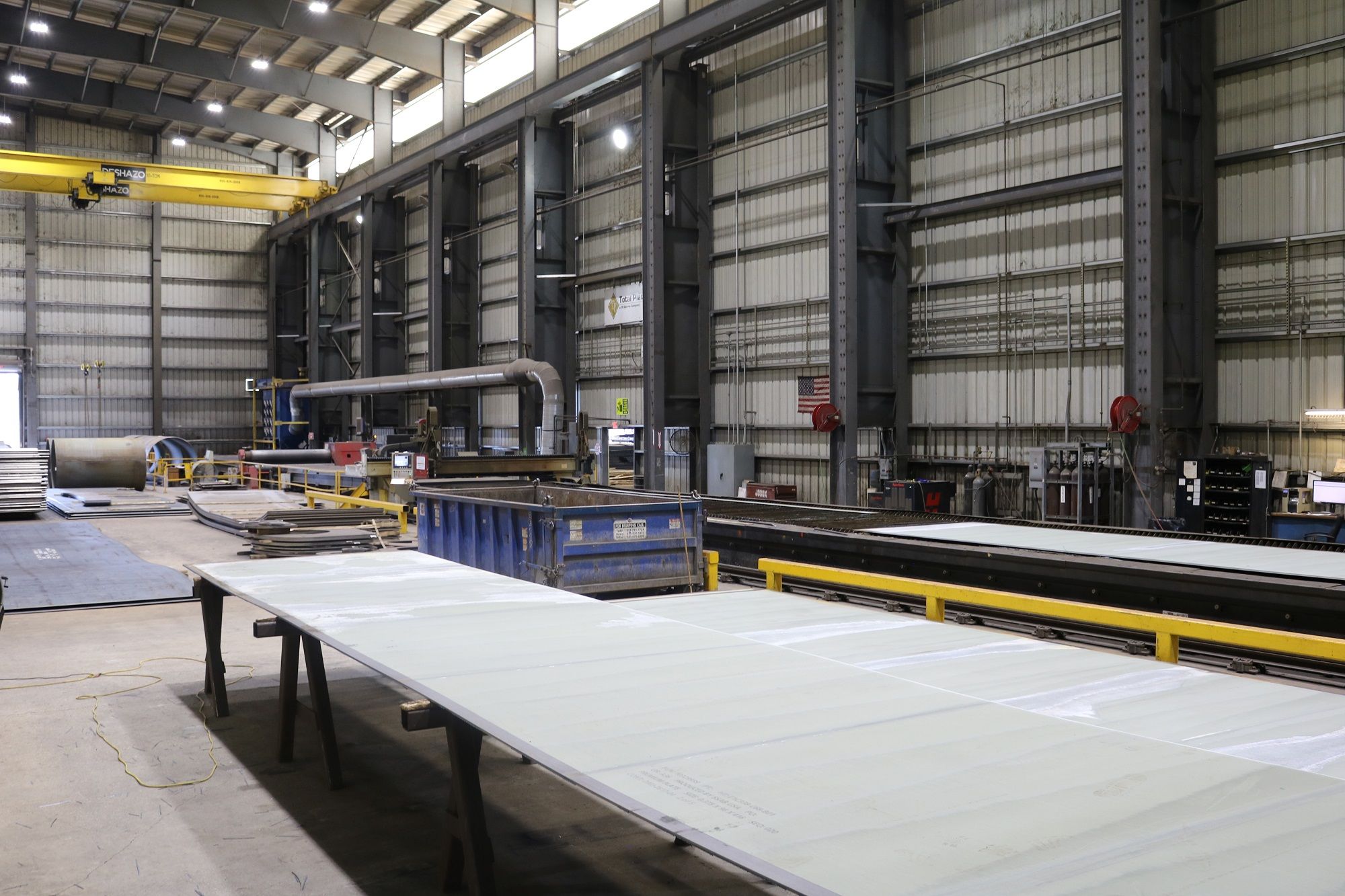
Every Tarsco tank starts in our American manufacturing facilities, where we control quality from raw material through final panel coating. This factory process delivers coating consistency and longevity that field-applied systems simply can't match.
2. Built to Relevant Standards for Regulated Use
Tarsco engineers every tank to applicable standards:
- AWWA D103 governs factory-coated bolted steel tanks for water service.
- NFPA 22 covers fire protection and water storage.
- IBC/ASCE 7 addresses structural design for wind and seismic loads.
When inspectors review your water storage systems, documentation traces materials, fabrication, coating application, and installation back to recognized standards.
3. Water Storage Use Cases That Match Data Center Needs
Tarsco tanks serve the specific applications that data centers depend on:
- Fire protection water reserves sized to code requirements with pump connections and monitoring.
- Process water and make-up water storage feeding cooling towers with capacity to handle demand during supply interruptions.
- Thermal energy storage tanks with integrated insulation systems that maintain chilled water temperatures for peak-shaving strategies.
We understand the difference between these applications and the engineers accordingly.
4. Insulation Systems and Thermal Performance Support
Tarsco manufactures vertical standing seam insulation systems in-house, shipping them integrated with your bolted tank rather than as a separate field-installed component. This factory coordination ensures proper fit, eliminates field coordination problems, and delivers tested thermal performance from day one.
5. Speed From Planning to Commissioning
Tarsco's delivery model supports fast-moving projects through in-house engineering that provides PE-stamped drawings quickly, factory fabrication that happens on predictable schedules without weather delays, and professional installation crews who work systematically through tank erection.
6. In-House Engineering and PE Stamped Drawings
Tarsco provides engineered drawings stamped by licensed professional engineers, as required by project location and jurisdiction. Our staff understands our products, manufacturing capabilities, and installation methods intimately.
7. Solving Common Data Center Build Challenges
Tarsco Bolted Tank is an expert in solving many Data Center Construction Project Challenges:
- Accelerated construction schedules
- Minimal on-site disruptions
- Scalable for future expansions
- Engineered for mission-critical reliability
- Corrosion-resistant products for long life
- Predictable costs for budget control
- Little weather-related risks
Frequently Asked Questions
Recent Posts
Tank Foundation Types: Ringwall vs. Slab vs. Deep Foundations
Custom vs. Ready-Made Steel Tanks: What’s Best for You?
TES Tanks: What They Do, Why They Pay Off, How They Work
Caustic Soda Storage Tanks: No More Winter Flow Surprises