Deciding between a custom-built reservoir and a standardized unit is one of the first major forks in the road for any liquid storage project. While a bespoke tank offers a tailored fit for unique site constraints, the rise of ready to ship storage tank solutions has changed the math for many operators. The choice ultimately dictates how quickly you can get fluid in the tank and how much you will pay for the engineering hours required to get there.
Why the Right Tank Approach Impacts Project Success
Choosing a tank construction method is a strategic decision that ripples through every phase of the job:
- Timeline Sensitivity
In sectors like fire protection or municipal water, a schedule slip of just a few weeks can push an entire facility's go-live date back. Standardized tanks keep the critical path moving.
- Budget Constraints
Custom engineering always comes with a premium. When you’re working with a hard cap on capital expenditure, opting for a standardized design provides a much more predictable financial trajectory from day one.
- Regulatory and Load Requirements
Local building codes, peak wind speeds, and seismic classifications set the "must-haves" for structural integrity. Often, these requirements fit perfectly within the envelope of a standard model, but extreme environments might push you into custom territory.
- Future Expansion Considerations
One of the biggest perks of certain bolted systems is the ability to add rings later to boost capacity. However, that kind of scalability has to be baked into the initial design and foundation planning.
What Are Ready-Made and Pre-Engineered Tanks?
Understanding a Pre Engineered Bolted Steel Tank
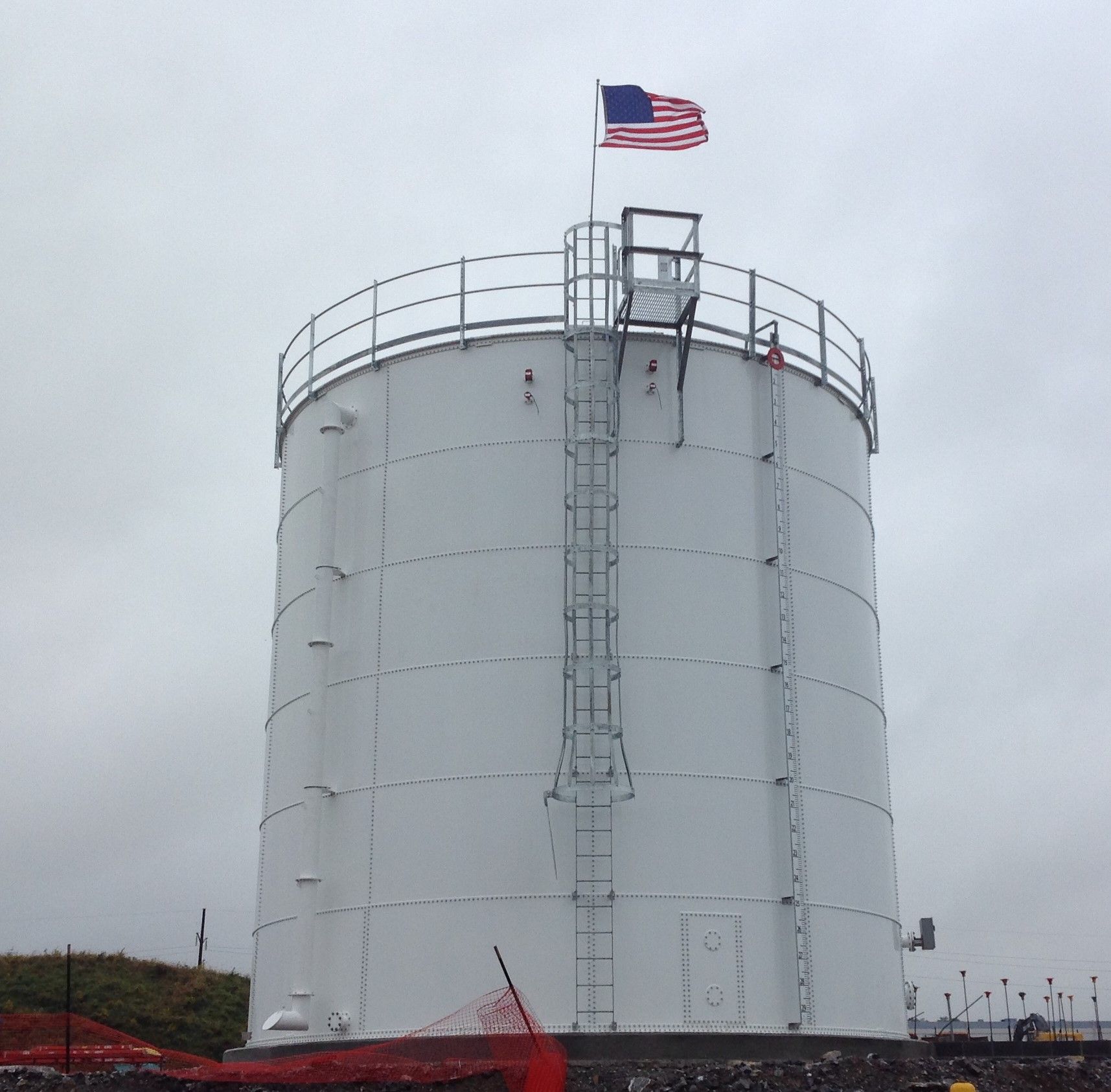
A pre engineered bolted steel tank is exactly what it sounds like: a storage vessel where the core structural engineering is completed in advance and validated for specific load cases. These systems are built around a set of standard diameters and heights, supported by pre-designed structural calculations.
Think of it as a kit of parts. The tank arrives on site as a modular panel system, sometimes referred to as a "tank in a box", complete with all the hardware, gaskets, and fittings needed for assembly.
Because the design is locked in, manufacturers can stock materials or even complete units, offering a ready-to-ship storage tank that drastically compresses project timelines. These units are optimized for fast deployment, making them an attractive option when the application fits within the preset parameters.
What Defines a Custom Tank System?
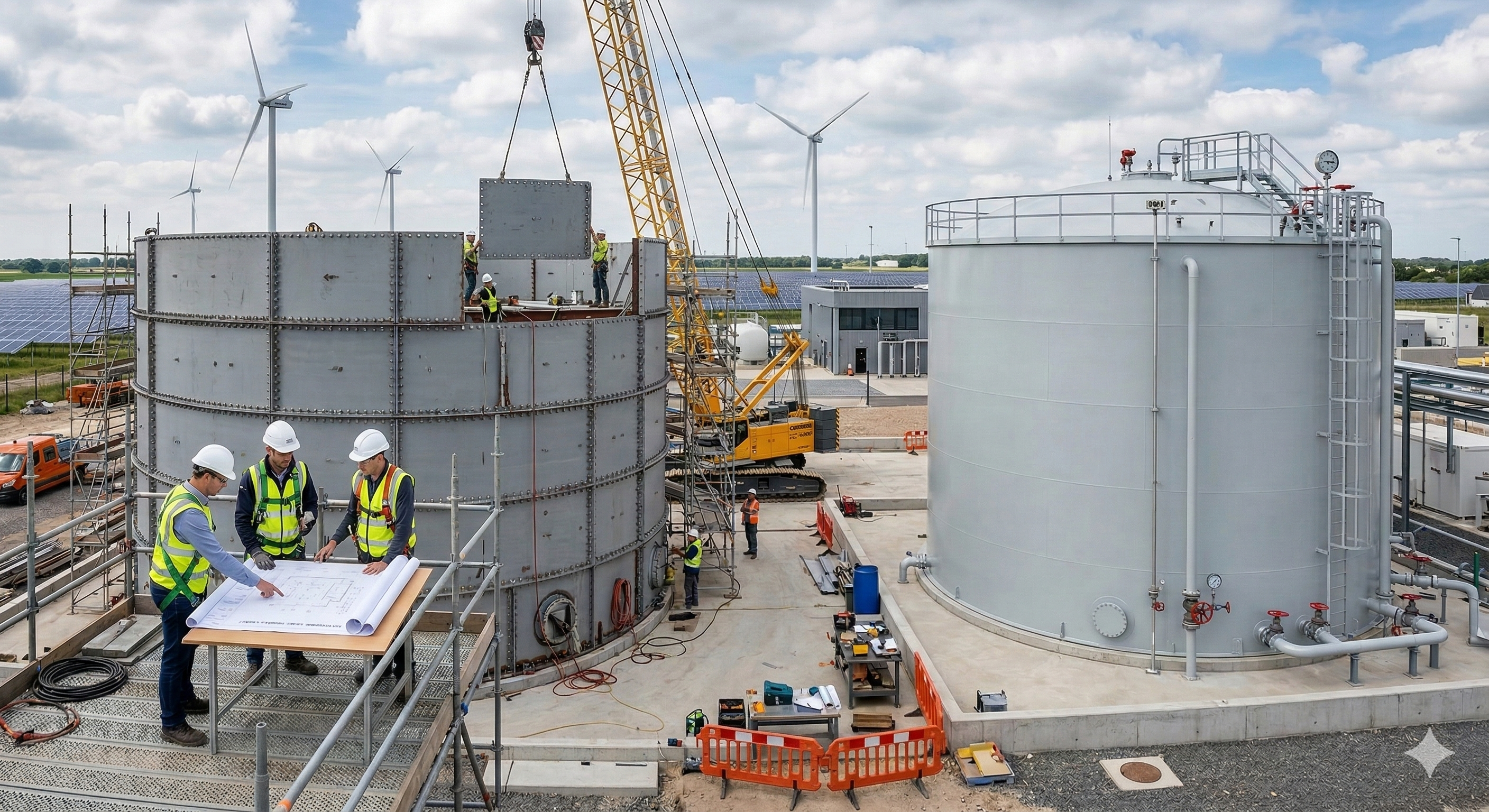
On the other end of the spectrum sits the custom tank. Here, the engineering follows the site, not the other way around. A custom tank is engineered for a specific set of conditions. The dimensions are tailored to the exact capacity and footprint available. The structural design accounts for unique environmental loads, such as high seismic activity, extreme wind speeds, or heavy snow accumulation.
Custom fabrication also enables the integration of complex foundations, a wide array of nozzle placements, and specialized coatings or liners tailored to unique chemical compatibilities or regulatory standards. It is a solution built from the ground up for a specific location and purpose.
DiamondReady™ Tanks: A Smarter Pre-Engineered Solution
To see how the pre-engineered model works in a real-world context, look at Tarsco Bolted Tank's DiamondReady™ line. These tanks are a direct implementation of the ready-made steel tanks concept, engineered specifically to meet the demands of customers across Mexico, Central America, and South America. They are built for two of the most common and critical applications in that market: water storage and FM-style fire protection.
What Makes DiamondReady Different?
The value of a DiamondReady tank lies in its standardization. By locking in the design, Tarsco eliminates the lengthy engineering and approval cycles that typically delay custom tank projects. This allows units to be manufactured in advance, stocked, and shipped immediately, functioning as a true ready to ship storage tank for qualified applications. This approach helps customers reduce project timelines, secure faster installations, and avoid the delays often associated with sourcing imported specialty components.
The initial lineup focuses on two specific, high-demand capacities: an FM 500 – 30,000-gallon tank and an FM 500 – 150,000-gallon tank. While optimized for cost and rapid delivery, these tanks do not compromise on standards. They maintain Tarsco's hallmark quality: robust construction, structural integrity, and the same high-grade coating quality expected from a custom build. They offer dependable, FM-style fire protection readiness and versatile water storage capability in a streamlined package.
For the customer who needs fast availability and trusted engineering without the wait of a custom design cycle, a DiamondReady tank provides the ideal balance of speed and reliability.
Advantages of Ready-Made Steel Tanks
Faster Delivery and Installation
Time is often the most critical factor. The ability to source fast shipping steel tanks can mean the difference between meeting a deadline and facing significant penalties. Because the engineering phase is reduced to a simple validation, the procurement timeline becomes highly predictable.
Once the ready to ship storage tank arrives on site, the modular panels bolt together quickly. Erection time for a bolted tank can be significantly shorter than for a field-welded equivalent, and it can proceed in weather conditions that would halt field fabrication.
Lower Initial Engineering Cost
Standardized drawings are reusable. There is no need to pay for hours of structural analysis from scratch. This streamlining of approvals, both internally and with regulatory bodies, translates directly into lower initial engineering costs.
Proven, Repeatable Designs
There is comfort in a track record. Ready-made steel tanks come with an established performance history. You are not betting on an untested configuration; you are deploying a design that has been built and has performed successfully in the field many times before.
Limitations of Ready-Made Steel Tanks
- Pre-engineered solutions operate within defined boundaries.
- Fixed sizing constraints may not align perfectly with unusual volume requirements.
- Limited flexibility may challenge projects with atypical site geometry or environmental loads outside predefined parameters.
- Standardized material use may not optimize structural efficiency for unique conditions.
- Long-term expansion options may be narrower than those available with fully customized configurations.
Advantages of Custom Tank Engineering
When the standardized box doesn't fit, custom engineering opens up the possibilities:
- Design Flexibility
Custom engineering allows optimization of diameter-to-height ratios, roof systems, penetrations, and floor types. Sealant types or gasket materials in bolted joints can be selected to suit the stored product and operating conditions.
- Performance in Challenging Conditions
For projects located in high seismic zones, regions with extreme wind or snow loads, or sites with weak or variable soil conditions, a custom design is often the only safe path forward. Engineering can account for specific dynamic loads and foundation interactions beyond the scope of a pre-engineered model.
- Long-Term Strategic Fit
For assets intended to operate for decades, a custom tank can be configured for expansion, allowing for future additions that wouldn't be possible with a fixed-size panel system. While the upfront cost is higher, the optimized lifecycle cost, achieved through tailored corrosion protection systems and materials matched precisely to the stored product, often makes it the more economical choice over the long haul.
When to Choose Each Option
Pre-Engineered Tanks Are Best When:
The timeline is the driving force. If you need a tank in operation quickly, a pre engineered bolted steel tank is hard to beat. This option is also ideal when the application is standard – think municipal water, wastewater, or fire protection, where the design parameters are well-understood and consistent across many sites. It also provides a high degree of budget predictability, as the engineering costs are fixed and known upfront.
Custom Tanks Are Best When:
The site conditions are complex. If the geotechnical report raises red flags or if the required capacity is highly specific and falls outside standard diameter/height ratios, a custom approach is necessary. Furthermore, if regulatory or environmental loads, such as seismic or wind, exceed the standard parameters of pre-engineered offerings, a custom tank engineered for that specific location is required.
Key Questions Before Making a Decision
To help frame the discussion with your engineering team or supplier, run through these questions early in the project:
- What environmental loads must the tank withstand? Are we in a standard zone, or is seismic/wind a primary concern?
- Are there strict compliance requirements? Does the local jurisdiction accept standard designs, or are there specific codes that must be met?
- Is expansion planned? Will this tank be the final configuration, or is the site expected to grow?
- How critical is lead time? Can the project absorb a 6-9 month fabrication cycle, or is a 3-month delivery essential?
- Is long-term optimization more important than upfront savings? This is the classic trade-off between initial CapEx and total lifecycle cost.
Conclusion: Matching the Tank Type to Project Priorities
Both custom-engineered tanks and pre-engineered solutions serve critical roles in the storage market. The distinction lies in how closely project conditions align with standardized design parameters.
Where applications are consistent and timelines are compressed, fast-ship steel tanks built around proven configurations can deliver efficiency and predictability. Where loads, soils, or regulatory demands exceed those boundaries, custom engineering provides the flexibility required for performance and durability.
Recent Posts
Tank Foundation Types: Ringwall vs. Slab vs. Deep Foundations
TES Tanks: What They Do, Why They Pay Off, How They Work
Caustic Soda Storage Tanks: No More Winter Flow Surprises
Bolted Tanks vs Welded Tanks: Selecting the Right Storage Tank(s) for Your Next Project