
Choosing between bolted tanks vs welded tanks requires understanding how each system is designed, fabricated, and installed. Both solutions are widely used in industrial storage applications, but their construction methods lead to different advantages depending on project scope, site conditions, and lifecycle requirements.
| Feature | Bolted Tanks | Welded Tanks |
|---|---|---|
| Assembly | On-site mechanical assembly | Full fusion welding on-site |
| Speed | 3x faster installation | Slower (labor-intensive) |
| Coating | Factory-applied (cured) | Field-applied (weather dependent) |
| Leak Prevention | Gaskets & Sealants | Continuous seams (Seal-welded) |
1. What are Bolted and Welded Tanks?
Bolted Tank:
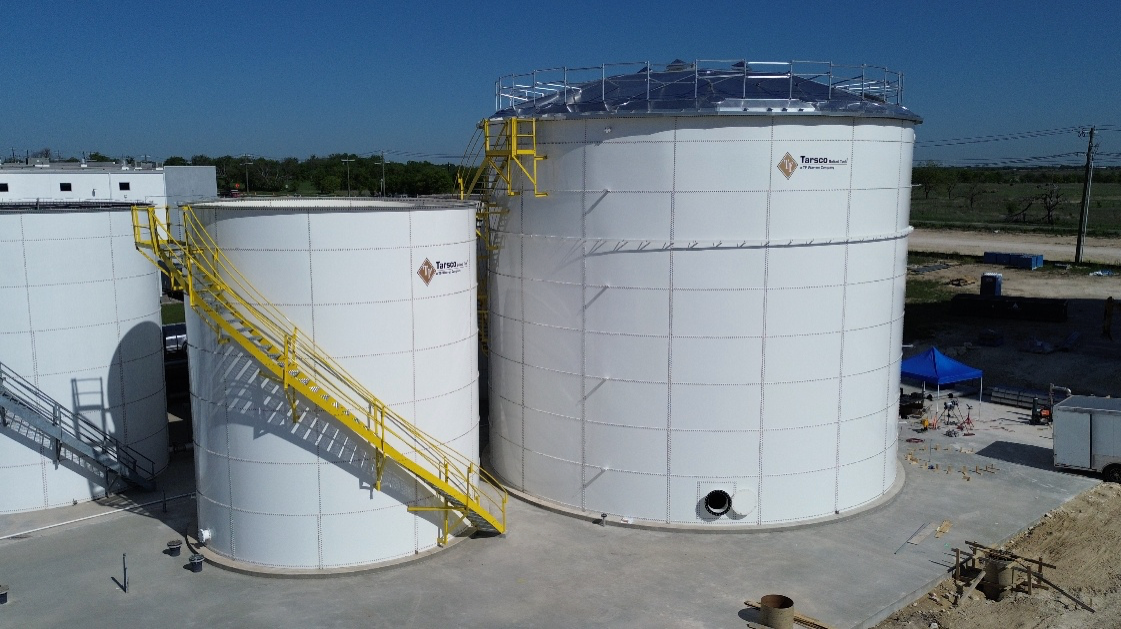
A bolted storage tank is a modular vessel constructed from individual steel or alloy panels that are manufactured and coated in a factory, then assembled on-site using bolts, gaskets, and sealants. Unlike welded tanks, they do not require extensive on-site welding or field coating, making them faster to install and easier to transport.
Welded Tank:
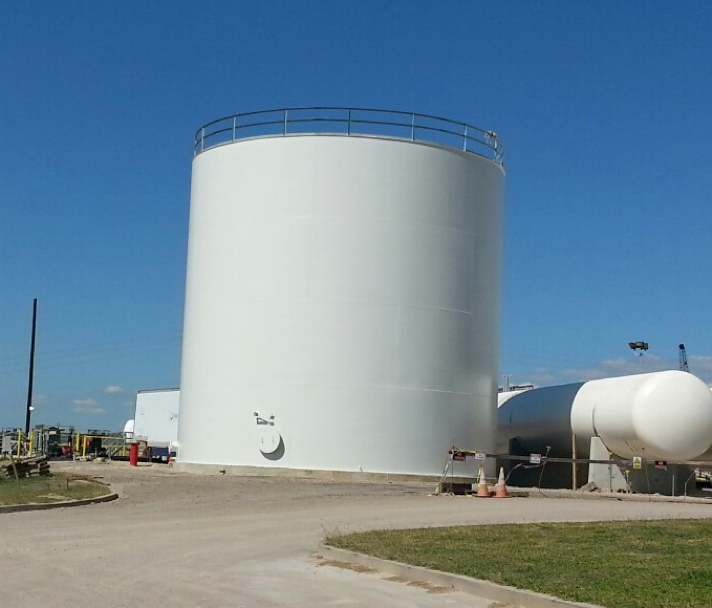
A welded storage tank is a large container constructed by fusing heavy-gauge plates together, most commonly steel, using heat to create a continuous, leak-proof structure. Unlike bolted tanks that rely on gaskets and thousands of bolt holes, welded tanks are "seal-welded" for maximum integrity.
When comparing construction methods, the difference between bolted and welded connection systems lies in how structural integrity and leak prevention are achieved – mechanical compression versus continuous fusion.
2. Manufacturing: Difference Between Bolted and Welded Connection
The manufacturing approach differs between bolted and welded tanks, mainly in how components are fabricated, assembled, and finished. These differences influence production control, field work requirements, and the level of on-site labor involved.
Bolted Tank:
- Engineering and Design: Every tank is custom-engineered to meet specific site requirements and industry standards like AWWA D103 (potable water), Factory Mutual, or NFPA 22 (fire protection), as examples. Design calculations account for wind, seismic loads, and liquid pressure, as well as the performance of bolted vs welded connections under cyclic loading and thermal movement.
- Material Selection: Most tanks use high-strength carbon steel or stainless steel.
- Precision Specs: Designs include calculations for wind, seismic loads, and liquid pressure to determine the required steel thickness and bolt patterns.
- Factory Fabrication: The manufacturing phase utilizes automated technology to ensure exact tolerances, which are critical for a leak-free seal.
- Cutting and Punching: CNC plasma cutters trim panels to size, while automated turret punches create perfectly round bolt holes accurate to 0.001”.
- Panel Shaping: Hydro-mechanical press brakes form panels to the precise radius required for the tank's diameter.
- Component Welding: Accessories like nozzles, ladders, and manways are often attached using robotic welding for maximum consistency and strength.
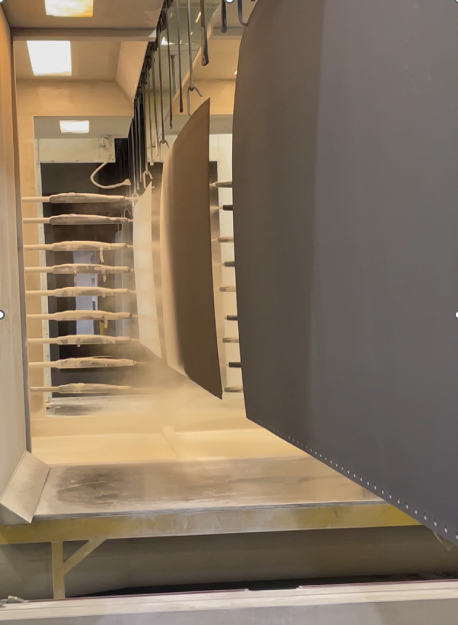
- Factory Coating Process: Coating is a defining step in bolted tank manufacturing, applied in a controlled factory setting to eliminate weather-related defects.
- Surface Preparation: Panels undergo sandblasting or chemical cleaning to remove impurities.
- Application: Options include powder coating (electrostatically applied epoxy), glass-fused-to-steel (porcelain enamel fused at high heat), or hot-dip galvanizing.
- Curing: Panels are heat-cured in large ovens (often at 350°F+) to create a durable, chemically resistant finish.

Welded Tank:
- Design and Engineering: Tanks are engineered according to specific standards (e.g., API 650 for petroleum products, AWWA D-100 for water) to withstand environmental loads and pressure requirements. Unlike modular systems, welded tanks rely entirely on continuous seams, which defines the difference between bolted and welded connection methods at a structural level.
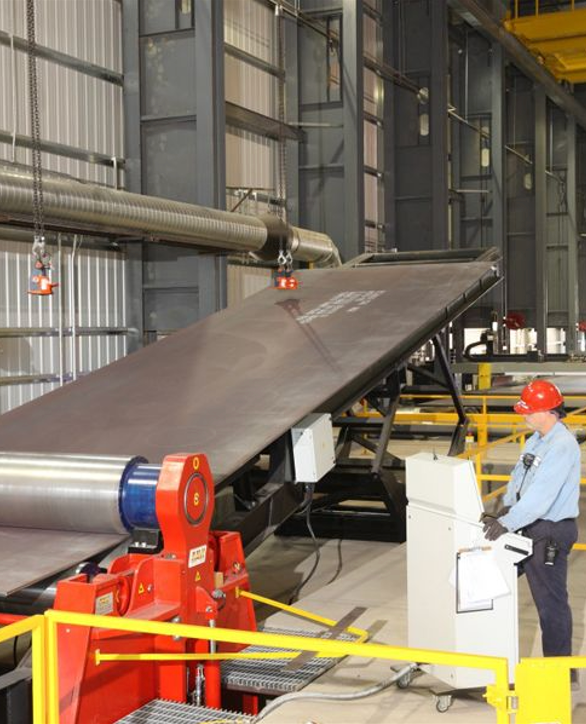
- Material Preparation: Raw materials, typically carbon or stainless steel, are cut, beveled, and rolled into curved shell sections using CNC plasma cutters and heavy plate rolls.
- Welding and Assembly: This phase focuses on aligning and joining prepared components to build the tank shell, floor, and roof as a single continuous structure.
- Tack Welding: Temporary welds are used to hold the shell plates, floor, and roof in alignment.
- Full Fusion: Certified welders use techniques like TIG, MIG, or submerged arc welding. Large field-erected tanks often utilize Automatic Girth Welders and Automatic Vert Buggies for consistent seams.
- Testing and Quality Control: To ensure zero leakage, welds may undergo hydrostatic testing (filling with water), X-ray inspection (radiography), or vacuum box testing – steps that are integral when evaluating welding vs bolting from a risk and quality assurance perspective.
- Surface Treatment: The interior and exterior are blasted and coated with liquid epoxy or specialized paints to prevent corrosion and extend service life.
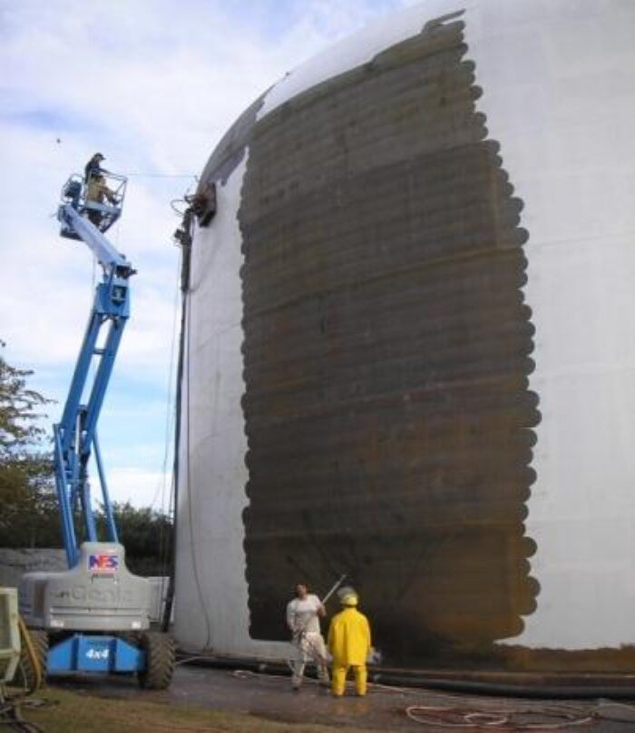
3. Installation Process: Welding vs Bolting
Installation methods vary depending on whether the tank is assembled from prefabricated components or constructed through on-site welding. These differences affect installation speed, labor requirements, and the level of field coordination needed during construction.
Bolted Tank:
The installation of a bolted storage tank is a precision-based process that involves assembling prefabricated panels on-site. Bolted tanks are commonly erected using a synchronized jacking process, which allows crews to work safely at ground level. This method typically takes approximately one-third of the time required for field-welded tanks and clearly illustrates the practical impact of welding vs bolting on installation efficiency.
Panel and Shell Assembly
- Top Ring First: The uppermost ring of the tank is assembled first at ground level.
- Bolting and Sealing: Panels are bolted together using high-strength hardware. Specialized gaskets or mastic sealants are applied between panels to ensure a leak-proof seal.
- Jacking Up: Once a ring is complete, it is raised using hydraulic jacks, allowing the next ring of panels to be added underneath.
- Torque Control: Bolts must be tightened to specific manufacturer-recommended torque settings.
Roof and Internal Components
- Roof Installation: Depending on the design, the roof structure is often assembled early in the process while the top ring is still at ground level.
- Internal Supports: If required, internal columns or stiffening rings (wind girders) are installed to provide structural stability against wind and seismic loads.
- Liners: For some tank applications, a flexible liner can be fitted over the interior wall and floor once the shell is complete.

Welded Tank:
The installation process for welded steel storage tanks is a highly technical field operation that follows strict industry standards, such as API 650 for petroleum products or AWWA D100 for water.
Bottom Plate Installation
- Layout: Steel plates are laid out on the prepared foundation according to a pre-planned sequence.
- Welding Sequence: To prevent deformation (waviness), welders follow a specific pattern, typically starting with alternate joints from the center outward.
- Annular Ring: The outer ring of plates (annular ring) is often welded before the main bottom plates are fully joined to the shell.
Shell Erection
- Two primary methods are used for vertical shell construction:
- Conventional (Plate-by-Plate): Workers erect the first "ring" or course of steel plates, weld them, and then proceed upward using scaffolding for subsequent levels.
- Jacking Method (Top-Down): The top ring and roof are built first at ground level and then lifted using hydraulic jacks to allow the next ring to be installed underneath. This method reduces the need for working at height.
Roof Installation
- Ground Assembly: Roofs are often assembled and welded as a complete structure on the ground or inside the first shell ring.
- Lifting: Once the shell is at its final height, the roof is lifted into place by a crane or, in some cases, "air-raised" using internal pressure.
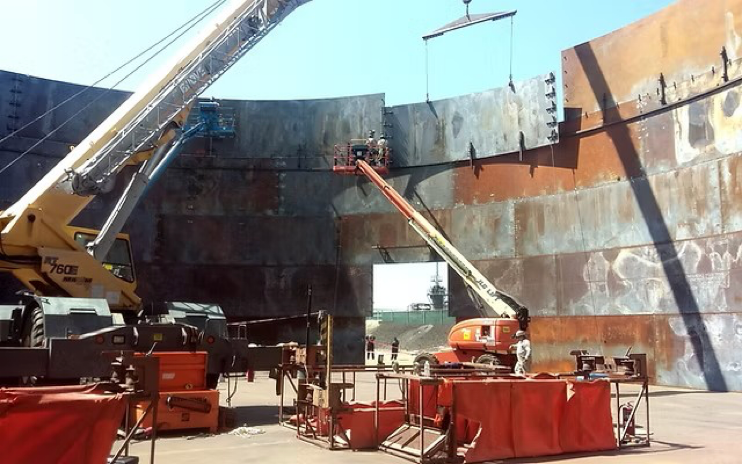
4. Bolted Tanks vs Welded Tanks: Key Comparisons
Selecting the ideal steel storage tank, whether bolted or welded, requires a careful assessment of project specifications, financial constraints, and long-term goals. When comparing bolted tanks vs welded tanks, these factors directly influence installation complexity, maintenance strategy, and total lifecycle cost. By leveraging the TF Warren Group's extensive industry expertise and diverse product portfolio, organizations receive durable, tailor-made storage solutions engineered for peak performance and lasting value.
A practical consideration often overlooked is how the tank will be transported and erected on site. Projects with limited access, tight schedules, or remote locations may favor assembly methods that reduce field labor and specialized equipment requirements.
Long-term operation also plays a role in the selection process. The difference between bolted and welded connection approaches can affect how easily individual components are repaired, replaced, or modified over the service life of the tank, particularly in facilities where operational downtime is costly.
5. Which Tank Is Right for You?
Selecting the appropriate tank type depends on project constraints, site conditions, and the nature of the stored material. The guidelines below outline common scenarios where each option is typically the better fit.
Choose Bolted Tank if:
- You have a tight project deadline and require faster on-site installation
- The project is located in a remote or logistically constrained area
- Potable water storage is required, with strict coating and hygiene standards
- Future maintenance access, expansion, or relocation may be necessary
Choose Welded Tank if:
- You are storing hazardous chemicals or petroleum products
- The application requires tank capacities beyond typical modular limits
- Site conditions allow extended field work and certified welding operations
- A permanent installation is the primary design objective
Evaluating these factors early helps ensure the selected tank solution aligns with both immediate project demands and long-term operational objectives.
FAQ
Recent Posts
Tank Foundation Types: Ringwall vs. Slab vs. Deep Foundations
Custom vs. Ready-Made Steel Tanks: What’s Best for You?
TES Tanks: What They Do, Why They Pay Off, How They Work
Caustic Soda Storage Tanks: No More Winter Flow Surprises